630-985-1600 | CONTACT US

The Gasaway Company FAQs For Services

Locally Owned & Operated In Illinois Since 1982

Water Delivery Q&As

How Much Water Do I Need To Fill My Swimming Pool?

Use our pool volume estimator to help you estimate the number of gallons you will need to fill your pool. If you have any additional questions feel free to call us and ask!

Can't I Just Use My Hose To Fill My Pool?

Of course, you can! If you are on city water you are ready to go, but if you have well water that is a different situation. Well water usually has many hard minerals in it, and takes a large quantity of pool chemicals to clear it up completely. Some well water can actually stain your liner orange. The strain and stress that pumping such a large quantity of water puts on the well pump is also substantial, and burning a pump out is quite expensive. Also, a typical garden hose will allow you to fill at a rate of 5-6 gallons per minute. That is approximately 300-360 gallons per hour. To put it into perspective, it would take a homeowner 17-18 hours to put 6,000 of water into their pool. By using water that is trucked in, you eliminate the risk of burning out your pump, avoid costly chemicals and save precious time and energy.

How Much Will It Cost To Fill My Pool?

Costs depend upon your mileage from Romeoville, how much hose we will need, and the quantity of water you need. Give us a call and we’ll give you a price quote over the phone!

How Much Water Does Your Truck Hold?

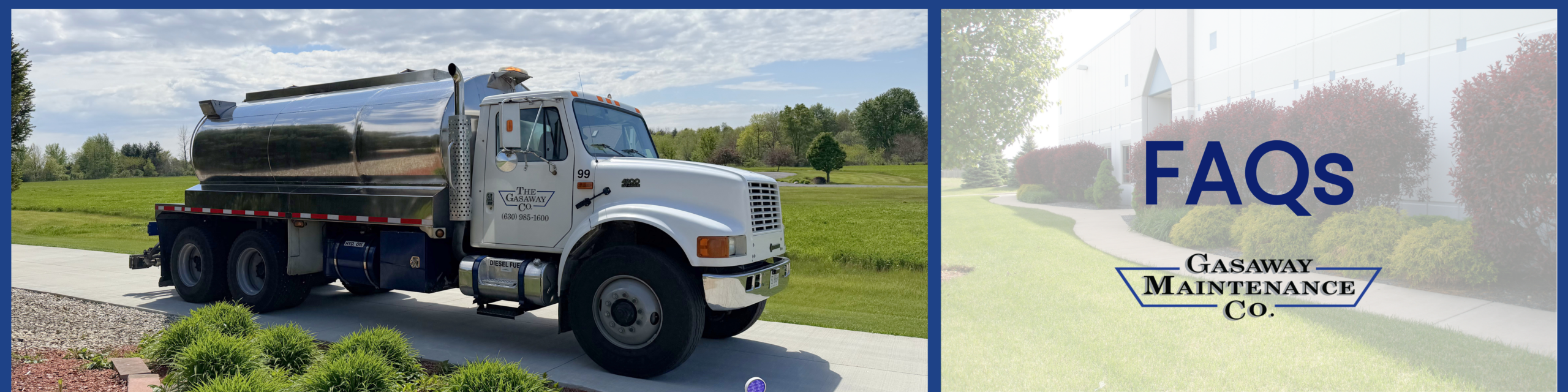
Our semi trucks hold about 6,000 gallons water, although we do have smaller trucks available for smaller jobs. We also utilize our smaller straight trucks for jobs that are inaccessible with a semi truck.  Sometimes complicated pool fills need to be done by the hour.

Why Does It Matter How Far Off The Road My Pool Is Located?

We cannot drive our semi trucks on typical residential asphalt driveways. A fully loaded water truck will put ruts in the asphalt. So instead our trucks park on the road, and we pump the water into your pool using the 150′ of hose that is included with every job. If you need more hose than that it’s no problem! We can pump water up to 650 feet from the truck. There is no water job too large or too small for us – just give us a call!

Where Does Our Water Come From?

All of our water comes from local municipalities. The water comes off of their hydrants.  It is the same water that has been treated for home use. At Gasaway we never deliver pond or lake water.

When Do You Deliver Water?

We are able to accommodate your water needs Monday – Saturday during normal business hours. We can also help after 5 pm or on Sundays, but additional fees will be added. We begin shipping water in early spring when the temperatures get above 32 degrees, and typically stop with water shipments by Thanksgiving.

What Type Of Payment Do You Accept?

We will accept cash and credit cards (AMEX, Discover, VISA, MC.) We can bill business accounts if credit has previously been established. We no longer are able to accept checks, and private pool customers will not be billed.

Where Can I Go If I Am Having A Problem With My Water Quality?

We are not pool specialists, but you may want google a pool water expert or go into your local pool store for advice.  Most do water testing.

Pool Water Delivery Q&As

What Types of Pools Do You Fill?

Gasaway Maintenance regularly fills above ground pools, inground pools, fiberglass pools, hot tubs, indoor pools, outdoor pools, and even ponds.

Do You Deliver Pool Water to Homes?

Yes. We deliver to your home to fill, refill, or ‘top off’ your swimming pool. Our technicians are mindful of your property to make water delivery a hassle-free experience.

Why Would I Need to Drain My Pool for Cleaning?

Sometimes the most effective way to clean a pool is to drain the water. This allows deep cleaning of the lining, concrete, walls, and other areas that are difficult to clean when the pool is full. If your pool has high TDS (total dissolved solids) and chemicals can no longer balance the water, draining is often the best solution. After cleaning, Gasaway can quickly refill your pool with fresh, filtered water.

How Do I Prepare for Pool Water Delivery for My Newly Installed Above Ground Pool?

When scheduling water delivery for your newly installed pool it is important to coordinate with the installer. Water delivery should be scheduled the day of installation or the next day. Above ground pools need about 12” of water to ballast the pool and hold the sides in place until the remaining water is delivered. Make sure the water delivery truck has ample room to park on the street near your home. If there is a fence or gate, access is necessary. All pets should be restrained in the house.

How Do I Prepare for Pool Water Delivery for My Newly Installed Inground Pool?

When scheduling water delivery for your newly installed pool it is important to coordinate with the installer. Water delivery should be scheduled the day of installation or the next day. Coordinate with the installer to determine the total gallons of water suggested. Also coordinate the day and time the installer requires the water delivery.

How Do I Prepare for Pool Water Delivery When My Existing Pool Needs Maintenance?

Before delivery:

  • Ensure the pool is dry and remove all standing water, dirt, debris, and branches.
  • Complete any maintenance or repair issues before refilling.
  • Calculate your pool’s water volume based on dimensions.

We provide an online Pool Water Calculator to help with this step. Click Here To Download The Gasaway Company Pool Volume Estimator PDF.

Do You Deliver Water to My Pool After Maintenance or Repairs?

Yes. Many maintenance or repair projects require draining some or all of the pool water. Once the work is finished, our water delivery service ensures your pool is refilled quickly so it’s ready for use again.

Do You Provide Pool Water Top-Off Service?

Yes. Many homeowners request a water delivery to top off their pool at the start of summer. This saves time, conserves well water, and gets your pool swim-ready faster.

How Often Should Pool Water Be Replaced?

Pool water should be replaced every 5–7 years. Over time, outdoor contaminants like bacteria, debris, and spores reduce water quality. Replacing pool water extends the life of your pool, lining, and equipment while also reducing the risk of water-related illnesses.

How Quickly Can Your Truck Fill My Pool?

Our 6,000-gallon stainless steel trucks can deliver and discharge water rapidly. On average, it takes about 20–30 minutes to unload a full truckload of water into your pool. Larger pools requiring multiple loads can often be filled the same day, depending on scheduling and site access. Multiple trucks can be assigned to the project when necessary.

Actual fill times may vary depending on site access, hose setup, and scheduling, but most pools can be filled within the same day.

Special Events Water Barrels & Barricades Q&As

What Types of Events Require Water-Filled Barricades or Barrels?

Water-filled barricades and barrels are commonly used at parades, festivals, concerts, sporting events, and construction-related detours. They provide stability, crowd control, and traffic management to keep events safe and compliant.

How Does Gasaway Maintenance Deliver Water for Barricades and Barrels?

Our fleet includes tank trucks of all sizes from landscape water trucks holding about 750 gallons, our 2000 gallon straight tank trucks to our 6,000-gallon stainless steel semi-trucks. Depending on your event the appropriate vehicle will transport fresh municipal water to your event site. Our professional drivers coordinate directly with event managers to ensure all barricades and barrels are filled quickly and efficiently.

Can Water-Filled Barricades and Barrels Be Used for Traffic Control?

Yes. Many municipalities require water-filled barricades for road closures, lane shifts, and construction detours. They are an effective, safe solution for temporary traffic management during events.

How Many Gallons Are Needed to Fill a Barricade or Safety Barrel?

The capacity varies depending on the type of barricade or barrel. Our team will review your event layout, estimate the total water volume required, and schedule the correct number of trucks to ensure everything is filled on time.

What Areas Does Gasaway Maintenance Serve for Event Barricade Water Delivery?

We proudly provide bulk water delivery for special events in the Greater Chicago area, Northwest Indiana, and Southern Wisconsin. This includes major suburbs, downtown venues, and regional event locations.

Why Choose Gasaway Maintenance for Event Water Delivery?

With over 40 years of bulk water delivery experience, Gasaway Maintenance offers reliable service, experienced drivers, and fast response times. We understand the importance of safety and compliance at public events, making us the trusted choice for event organizers and municipalities.

Plan Your Event Water Delivery Today

⇒ Request Event Water Delivery for Barricades & Barrels
⇒ Call Us Today: (630) 985-1600
Gasaway Maintenance ensures your event is safe, compliant, and ready to go.

Ice Rink Water Delivery Q&As

Can Gasaway Maintenance Deliver Water for My Ice Rink?

Yes! We specialize in bulk water delivery for ice rinks of all sizes — from backyard hockey setups to full-size community rinks and commercial ice arenas. Our 6,000-gallon stainless-steel trucks deliver fresh, filtered municipal water throughout the Greater Chicago Area, Northwest Indiana, and Southern Wisconsin.

How Much Water Do I Need to Fill an Ice Rink?

A: The amount of water depends on your rink’s size and desired ice thickness. Use this formula to estimate:
Gallons = Length × Width × Depth (in feet) × 7.48

For example:

    • 20′ × 40′ backyard rink = ~1000 gallons
    • 40′ × 80′ community rink = ~4,000 gallons
    • 60′ × 100′ park district rink = ~9,000 gallons
How Quickly Can Gasaway Fill My Rink?

Most small to medium rinks can be filled within a few hours. Larger commercial rinks may require multiple loads, but our dispatch team coordinates deliveries to minimize downtime.

What Type of Water Does Gasaway Deliver?

We deliver fresh, filtered municipal water from local city sources. It’s clean and ready for freezing without impurities that cause cloudy or brittle ice.

How Do I Prepare for Rink Water Delivery?
      • Ensure the rink base is flat and level.
      • Clear a driveway or street-access point for our delivery hose (no residential driveways).
      • Make sure all rink boards and liners are securely in place.
      • Plan for temperatures below freezing within 24 hours of delivery to allow proper freezing.
Can You Deliver Water for Ice Resurfacing or Zamboni Tanks?

Yes. We supply bulk water for indoor ice-making equipment, resurfacing tanks, and fire suppression systems at arenas or rinks.

What Are Your Service Areas for Ice Rink Water Delivery?

We service:

      • Greater Chicago and Suburbs in Cook, DuPage, Will, Kane and Kendall Counties
      • Northwest Indiana – Lake, Porter, Jasper and Newton Counties
      • Southern Wisconsin -Kenosha, Racine and Walworth Counties)

Dust Control Q&As

How Much Does Dust Control Cost?

Dust Control should be part of an ongoing  preventative maintenance program for everyone with an unpaved yard or roadway. The prices are based upon the the size of the job site, the condition of the surface base, and the traffic velocity. Well maintained gravel yards and lots are very economical to treat. Give us a call and we’ll give you a quote!

What Is The Product That You Use For Dust Control?

We use a proprietary blend dust suppressant chemicals that allow for dust to be controlled for up to 4 months, depending upon the amount of truck/car traffic. The blend holds moisture in aggregate base and binds the fine particles to create a strong surface.

Is The Calcium Chloride Bad For My Car?

Noticeable vehicle corrosion is not likely to be associated with dust control applications of calcium chloride. First, the application rate is relatively low, so there is not much of it available to come into contact with passing vehicles. Second, thecalcium chloride tends to remain in the road bed. If it didn’t, it wouldn’t control dust very well because it would disappear from the road after a short while. If you are concerned about your vehicle, a basic car wash will remove it quickly.

How Long Before I Can Drive On It?

We recommend waiting for 2-3 hours before driving on the site in order to allow the DUSTDOWN to soak into the ground.

How Often Do I Need To Reapply?

Although the length of time depends upon the amount of traffic your job site gets, you can typically expect the road to remain dust free for 3-4 months. But with continual use the base will continue to get harder, and will not need to be treated nearly as much over time.

What Is Dust?

Dust is any tiny particle that lies on the ground or is carried into the air. Common sources of outdoor dust are sand, stone, pollen or dirt. According to air pollution studies nearly 34% of particulate matter in the atmosphere originates from unpaved roads. (Bernard et al 1992)

What Is Fugitive Dust?

Sounds malicious doesn’t it? “Fugitive dust” is the dust that moves beyond the property line where it was generated. Typically the source of fugitive dust is a quarry, construction site or manufacturing plant. It can also be the dust that leaves a road and ends up in someone’s house. Fugitive dust can be a problem for those with allergies, heart conditions or asthma.

What Is Dust Control?

Dust control is a preventative maintenance program used on gravel roads, gravel parking lots, haul roads, or any unpaved surface. A dust suppressant is sprayed on the unpaved surface in either one or two coats. The dust suppressant will hold the particles together and reduce the amount of fine particulate that escapes into the air. Depending on the suppressant used, either the ground says damp or the ground gets sticky. The idea is to keep small particles on the ground where they form a hard surface.

How Does Dust Control Work?

First the unpaved road or parking lot is graded to remove any low spots, potholes or ruts. The surface is crowned or pitched so that any rain water will roll off and not settle on the surface. Then a dust suppressant is applied and allowed to settle in. A vibratory roller is often used to compact the surface also. Vehicular traffic will continue to compact the surface over time.

Who Monitors Airborne Dust?

Primarily the EPA, but state and local agencies also have regulations that address acceptable levels of fugitive dust. Quarries, power plants, landfills, and large manufacturing plants file pm10 management plans with the EPA.

Can I Use Tree Sap For Dust Control?

A by product of paper production is lignon sulfonate. This is also known as tree sap. It is used for dust control on gravel roads and storage yards by binding particulate together.

How Do You Control Dust During A Building Demolition?

The most common method of controlling dust during a building demolition in the Chicago suburbs is by spraying water on the job site. Gasaway can provide various size tank trucks and drivers with hoses and nozzles when a water source is not readily available.

How Can I Reduce Dust From A Construction Site?

Most dust on construction sites comes from disturbed dirt during excavation. Commonly water and dust suppressants are applied to the haul roads to keep dust from leaving the job site. Gasaway can provide site specific dust control plans to reduce fugitive dust and comply with EPA regulations.

What Can I Put On My Dirt Road To Keep The Dust Down?

Dust on roads can be controlled by applying a dust suppressant. Calcium chloride, lignon sulfonate, and magnesium chloride are cost effective and commonly used in the Midwest. It is best to apply after the road has been graded and ruts removed.

How Do You Apply Dust Suppressants To Gravel Storage Yards?

Gasaway prepares the surfaces with a proprietary blend of prewet. Then the dust suppressant is applied is two coats to facilitate absorption complete coverage. Choosing the best dust suppressant for the site is critical.

When Is The Best Time To Apply Dust Suppressants To A Gravel Road To Control Fugitive Dust Issues?

In the Midwest dust control is usually applied to gravel roads in late spring and early summer. If the summer is especially dry a second application is recommended.

How Does Dust Control Save You Money?
When is the best time to apply dust suppressants to a gravel road to control fugitive dust?
How Is A Dust Control Program Good For The Environment?

A dust control program designed for a road or industrial property will reduce the particulate that enters the surrounding air and reduce silt runoff into local streams. The EPA regulate air pollution and water pollution.

Can You Apply Dust Suppressants Near Lakes, Streams & Rivers?

When applied properly by trained operators dust suppressants penetrate the surface of the area being treated. Studies show the compounds stay in place and do not run off the road bed. Nearby lakes, rivers streams are not affected.

Why Do Gravel Roads Create So Much Dust?

Dust is created by every vehicle that passes over an unpaved surface.

The amount of dust created depends on:

  • Volume of traffic – more vehicles means more dust
  • Speed of vehicles – the faster the vehicles pass over the surface the more dust
  • Weight of vehicles – Heavier vehicles crush the stone underneath causing more dust
  • Abrasive resistance of the road surface – a rougher road surface crushes more easily
  • The amount of fines in the aggregate mix – the smaller the particles the easier it is to become airborne
  • The Climatic conditions – high heat and low humidity create more dust

Asphalt Maintenance Q&As

How Much Does It Cost?

The prices are based upon the square footage and specifics of your job. Give us a call and we’ll give you a quote!

How Long Should I Wait Before Driving On A Newly Paved Surface?

For a newly paved roadway, asphalt can be driven on as soon as the rolling is completed. However, for parking areas we recommend waiting 12 – 24 hours for the asphalt to cool completely before driving on it.

Why Should I Choose Asphalt Paving Over Other Methods?

There are many reasons that  asphalt is better for the upper midwest:

  • Asphalt is not affected by the cold and does not deteriorate from the use of salt.
  • Asphalt absorbs heat from the sun causing snow and ice to melt much quicker than concrete.
  • While concrete is a better choice for warmer climate areas in southern states, asphalt in the upper midwest is the best choice.
  • Asphalt is considered environmentally friendly as it is recyclable.
  • Asphalt is porous which allows water to percolate to the soil and gravel below. Less run off water situations.
  • It is easier to work with and takes less time than other methods.
  • Maintenance is easier, less time consuming and less costly, as a top layer can be added to the permanent base.
  • Asphalt can last as long as twenty years which makes this method a long term solution.
  • Asphalt is a more cost effective method than other paving methods.
When Is The Best Time To Perform Asphalt Patchwork?

Spring, Summer and Autumn are ideal for asphalt patchwork, as long as no rain is in the forecast. When the temperatures drop below 50 degrees, it is not recommended to do asphalt work.

Does Gasaway Do Striping?

We do!

Concrete Maintenance Q&As

What Exactly Is Concrete?

In simplistic terms, concrete is a mixture of Portland cement, a fine aggregate (sand), a course aggregate (gravel), water and several chemical additives. When water mixes with the cement, a process known as “hydration” takes place that binds the whole mixture together.

When Is The Best Time Of Year To Fix Concrete?

Spring and Summer are always the best, as it takes time for the concrete to cure and should be kept above the 40 deg. F temperature during the critical curing period.

Will The Concrete Be Reinforced?

Not all concrete projects need to be reinforced, but large spans and concrete projects that will support a lot of weight (driveways, for instance) should be. Reinforcing with rebar does add to the labor time and cost, but is crucial to the longevity of some projects.

What Does The Term 'Spalling' Mean?

In regions such as ours where we periodically have severe freeze/thaw cycles, water can get into the concrete, freezes and cause small pieces of the concrete to chip off or spall. Sealants can help protect against spalling.

How Long Does It Take For Concrete To Cure?

Concrete actually gets stronger as it gets older with the curing process continuing for years. The hydration process happens rapidly at first and then slows down and so the standard has become that all concretes are rated at their 28-day strength. For practical purposes, we recommend that car traffic can generally enter onto concrete slabs after three days and truck traffic after seven days.

Would you like to talk to one of our sales representatives about the services that The Gasaway Company offers? Fill out the form below or call 630.985.1600.

Contact Us

The Gasaway Company

Romeoville, Illinois
630.985.1600

The Gasaway Company Is Proud To Be Affiliated With:

BOMA  |  IFMA  |  SIMA  |  UCA

Follow Us