
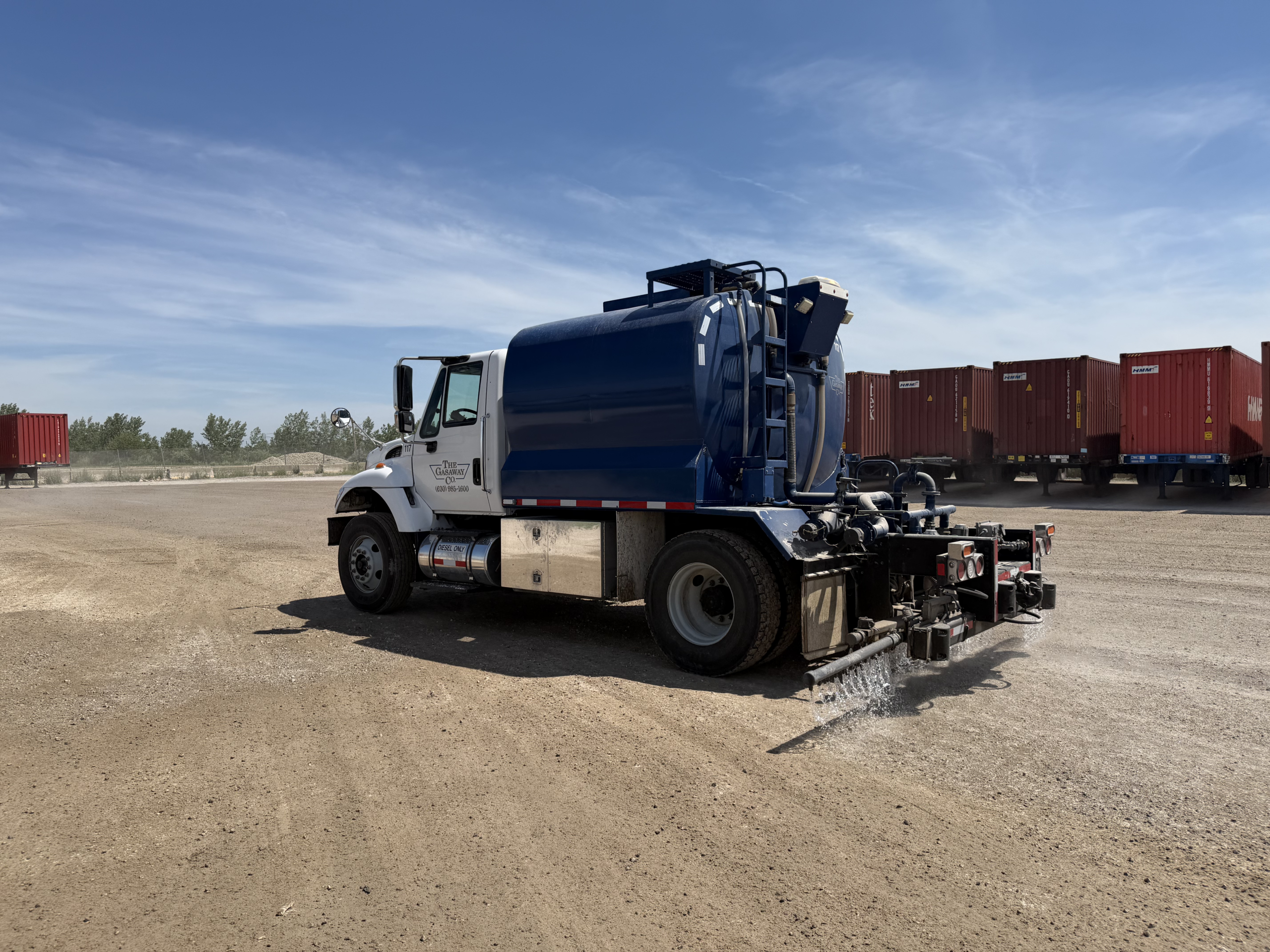

On active sites in Illinois and across the Midwest, dust is not an accident, it's built into the work. Any time you break, move, or store dry material, you create fine particles that become airborne and travel well beyond the work zone.
Where dust comes from
- Construction activities such as grading, trenching, cutting, and backfilling dry soil or aggregate create loose fines that wind, traffic, and equipment quickly lift into the air.
- Excavation work exposes dry subsoils. Bucket scraping, dumping, and tracking out on unpaved haul routes grind surfaces into respirable dust.
- Equipment and material yards with unpaved lots, gravel drives, and open stockpiles shed dust every time trucks turn, loaders pivot, or the wind hits exposed material.
Why these environments are a concern
Construction and storage yards have constant heavy equipment traffic, repeated passes over the same surfaces, and frequent material handling. That combination keeps fine particles in motion, which increases worker exposure, visibility issues, and neighbor complaints.
EPA Compliance and Regulatory Importance of Dust Control
For Illinois contractors, excavators, and yard owners, dust control is not just a best practice, it's a clear compliance requirement. Regulators treat uncontrolled dust as an air pollutant, and inspectors look for consistent measures that keep particulate levels in check. A structured dust control program (often supported by a professional provider such as industrial dust control services) directly supports worker health, keeps operations moving, and reduces avoidable safety problems.
Key expectations for Illinois job sites and yards
- Visible dust suppression on haul roads, staging areas, and access points, often through scheduled water application or approved stabilizing products.
- Controlled tracking at exits, with measures that limit dusty material from being carried onto public roads.
- Managed stockpiles, which typically means covering, crusting, or wetting material that can blow off site.
- Documented practices that show you have a dust control plan, clear responsibilities, and a schedule for treatments.
Effective Dust Control Methods and Their Health Benefits
Practical dust control doesn't have to be complicated, but it does need to be consistent. The goal is simple, keep fine particles on the ground and out of your crews' lungs.
Proven control methods for sites and yards
- Stabilization agents: Approved dust palliatives create a tougher surface crust on gravel or dirt areas, which reduces rework, cuts down on tracking, and provides longer lasting control between treatments.
- Covering and managing stockpiles: Tarps, crusting products, or routine wetting keep material from blowing off piles and into work zones, neighboring properties, or public roads.
- Good site management: Defined traffic routes, speed control, and prompt cleanup of tracked out material keep fines concentrated where you can control them.
Long-Term Advantages of Maintaining Dust Control
Consistent dust control is not a one-time box to check, it is a long-term business strategy that protects people, equipment, and projects across every season.
Lower regulatory exposure and smoother inspections
- Ongoing dust management helps you stay aligned with EPA expectations and local enforcement practices.
- Sites that consistently look controlled and organized are less likely to draw complaints or extended inspections.
- Documented, repeated controls support permit compliance across multiple jobs and yard locations.
- Stabilized haul roads and yards cut down on rework, slowdowns, and unnecessary wear on equipment.
For Illinois contractors, excavators, and yard owners who want long-term reliability, partnering with our experienced team keeps dust control consistent, documented, and aligned with your broader site management plan.
Learn more about our services here.