
The infrastructure planners forget to plan for
Event planning checklists cover a lot of ground: venue and site layout, permits, insurance, talent bookings, vendor contracts, marketing timelines, and security and emergency response plans. Sound and lighting get engineered down to the circuit. Ingress and egress routes get mapped and remapped.
Water rarely gets the same treatment. It shows up as a line item under "vendors" or gets bundled into a portable restroom contract, treated as a commodity rather than something that needs its own planning and timing.
That gap doesn't cause problems at setup. It causes problems six hours into a hot Saturday, when restrooms run dry, a dunk tank sits empty past its scheduled start, or barricades meant to hold back a crowd were never properly ballasted. Water touches sanitation, safety, and programming at once, which is exactly why it's easy to underplan and expensive to get wrong.
Restrooms and handwashing stations need water on a schedule, not just at setup
Portable handwashing stations hold a small amount of water, usually 2.5 to 5 gallons per tank, and a busy two-basin unit can run dry after 200 to 300 uses. At a multi-day festival with steady foot traffic, that can mean multiple refills a day, not one.
Portable toilets face the same pressure. Guidance for large events calls for servicing on a 24-hour schedule, including waste pump-out, restocking, and refilling water. For reference, a sanitation plan built for a 30,000-person gathering calls for 300 portable toilets and 140 handwashing sinks, all needing water on the same cycle.
Food vendors have their own requirement: continuous-flow handwashing stations supplied by potable water containers, kept running for the full event, not just at opening.
When any of these run dry mid-event, it's a hygiene problem and a potential compliance issue at the same time.
Water as physical safety equipment, not decoration
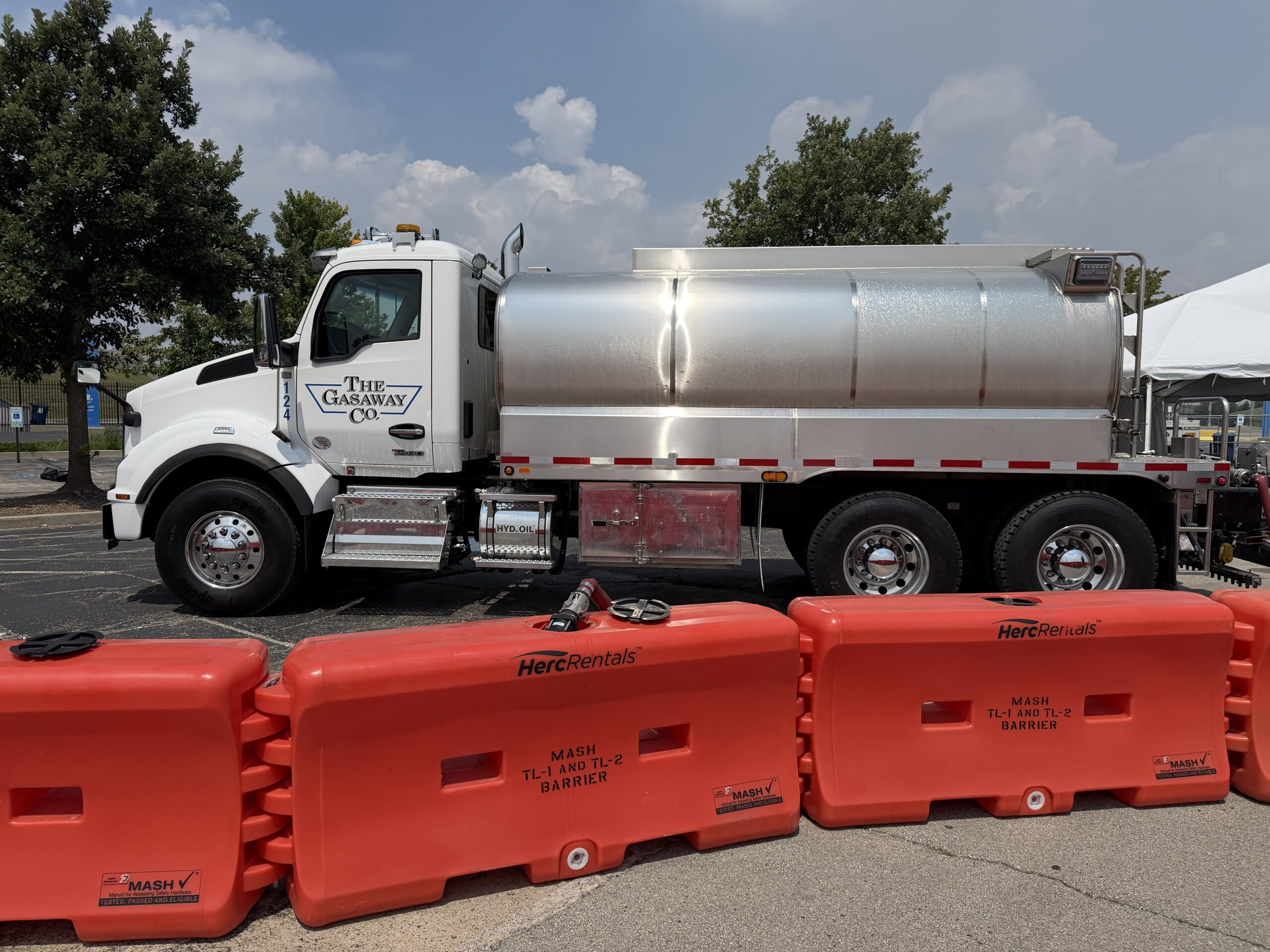
Water-filled barricades do real structural work at events. Empty, they're lightweight plastic units that can be positioned and interlocked by hand. Filled, an interlocked line becomes heavy enough to channel pedestrian flow, mark restricted zones, and resist accidental displacement from crowd pressure or wind. One documented barricade model holds roughly 80 gallons and weighs about 745 pounds full, a difference that matters when a crowd surges against a line separating a stage pit from open grounds.
Installation follows a set sequence: position units, interlock them, confirm drain plugs are closed, fill to capacity, cap, then check alignment and stability before opening the area to the public. Large installations often need bulk delivery rather than hose filling, since hoses can be too slow against a load-in schedule.
Dunk tanks and other water attractions run on the same overlooked logistics
Dunk tanks are one of the more visible spots where water logistics meets the fun part of an event, and they still depend on the same planning most organizers skip. A typical carnival dunk tank holds somewhere between 300 and 500 gallons, and a standard garden hose delivering around 9 gallons per minute needs roughly 45 to 90 minutes to fill it, longer if local water pressure is weak. On a festival schedule where the dunk tank is supposed to open at noon alongside a dozen other attractions, that hour-plus fill window is easy to lose track of.
Bulk water delivery changes the math. A tanker can fill the same tank in about 10 to 15 minutes, which matters if a tank needs topping off mid-day from splash-out and evaporation, or if a second tank has to be filled for a different location on the grounds. Any attraction built around standing water, dunk tanks included, needs someone accounting for total gallons and fill time before showtime, not during it.
The downstream cost of running out of water
If a tanker is delayed and a bank of portable toilets goes unserviced, the effect is not just an unpleasant restroom. Queues that stretch toward an hour become the top complaint at festivals, and once handwashing water runs dry, hygiene risk rises for everyone using that facility afterward.
The same delay creates safety exposure elsewhere on the grounds. A barrier that was supposed to be ballasted and filled by load-in either sits empty and unstable or gets set up late, cutting into the buffer time crews need before gates open. An attraction like a dunk tank that can't be topped off just sits closed, a small disappointment on its own, but one more sign to attendees that the event isn't well run.
Evaluating a bulk water provider
Before signing with anyone, planners should check a few basics: how fast the company can respond if a tank runs low mid-event, and whether its fleet can handle both large single deliveries and smaller top-offs.
Experience with events specifically matters too. A company that mainly handles construction sites may not know the timing pressure of a load-in schedule or a gate opening at a fixed hour.
Here at Gasaway Maintenance Company, based in Romeoville, Illinois, we've served the Chicagoland and Northern Illinois region since 1982. Our fleet ranges from smaller water trucks up to 6,000-gallon stainless-steel tankers, and our special-events service covers barricade and barrel filling with quick response capabilities and experienced drivers. We also donate a portion of every sale to Water For People, which supports safe drinking water access globally.
A short list to run through before signing
A few direct questions separate a provider who understands events from one who mostly hauls water to construction sites.
Ask how fast they can send a truck if a restroom tank or handwashing station runs dry mid-event, and whether response time changes on a weekend or holiday. Confirm their trucks can reach your delivery points, including tight load-in roads or fenced staging areas. Ask what capacity they can supply across the full event, including overnight camping if that applies, and whether they can handle both bulk tanker drops for ballasting and barricades and smaller top-offs for sanitation stations. Ask what happens if a truck is delayed or a second load is needed on short notice, and how far ahead you need to book.
Water belongs on the planning timeline, not the vendor list
Water logistics deserve a line item on the same planning timeline as staging and permits, not a callback once something runs dry. Restrooms, barricades, and attractions all depend on it. At Gasaway Maintenance Company, we're proud to have run bulk water delivery for over 40 years. Reach out to us today and plan your water logistics with us to ensure that your event runs smoothly.
Sources
- Music Festival Logistics Checklist — Tower House Global
- Selecting a Portable Toilet Supplier: Planning Counts, Handwash Stations, and Add-Ons for Peak Durations - Mighty Wiki — Mighty Wiki
- Guidance for Provision of Toilets at Special Events — Montana Department of Public Health and Human Services
- Sanitation Plan: Bi Mart Willamette Country Music Festival — Marion County Public Works
- Self-Inspection Checklist for Food Vendors at Temporary Events - NYC Health — NYC Health